Coleus Forskohlii: Graded D
This ingredient fails all three grading tests, and the disclosure failure is the one that makes the other two impossible to argue about.
What it is
A South Asian member of the mint family, used in Ayurvedic practice, whose root yields the compound that gives it whatever pharmacological interest it has: forskolin.
Correct choice — not for this purpose
Forskolin activates adenylate cyclase, raising intracellular cyclic AMP. cAMP is involved in an enormous range of cellular processes, which explains why forskolin turns up across many research fields — and why attributing any specific outcome to it is difficult.
The research base concentrates on:
- Glaucoma — reducing intraocular pressure, the most established use
- Asthma — bronchodilation via cAMP-mediated smooth muscle relaxation
- Body composition — small studies, heavily over-marketed, poorly supported
- Cardiovascular effects — vasodilation and blood pressure reduction
Joint health does not appear on that list. There is laboratory work connecting cAMP signalling to inflammatory mediators, which is presumably the rationale, but that is a long way from evidence that forskolin relieves joint symptoms in people.
Properly disclosed — no
The panel says 15 mg of Coleus Forskohlii Extract and stops there. No forskolin percentage is printed.
Commercial extracts are commonly standardised to 10% or 20%, which would put the actual forskolin content between 1.5 and 3 mg — but those are conventions, not requirements, and unstandardised extracts exist. Without a printed figure there is no honest way to state how much active compound is present.
Defensible amount — unknowable
Which is itself the answer. An ingredient you cannot quantify is one you cannot assess, and on a label that already asks for trust in two places, this is the line asking for the most.
Even taking the most generous standardisation assumption, human studies on forskolin generally use considerably more than 3 mg.
Interactions to raise with a pharmacist
- Blood pressure medication — forskolin lowers blood pressure and may compound antihypertensives
- Nitrates and other vasodilators — the same additive concern
- Anticoagulants — may inhibit platelet aggregation, adding to curcumin's similar effect
- Reflux or ulcers — forskolin can increase gastric acid secretion
Why D rather than F
Because it is not harmful at this amount in a healthy adult, and because forskolin is a real compound with real pharmacology rather than a filler chosen for label decoration. It is the wrong tool, in an unstated quantity, for the stated job — which is a poor grade, not a disqualifying one.
Sources
Other graded ingredients
See the Grades Before You Decide
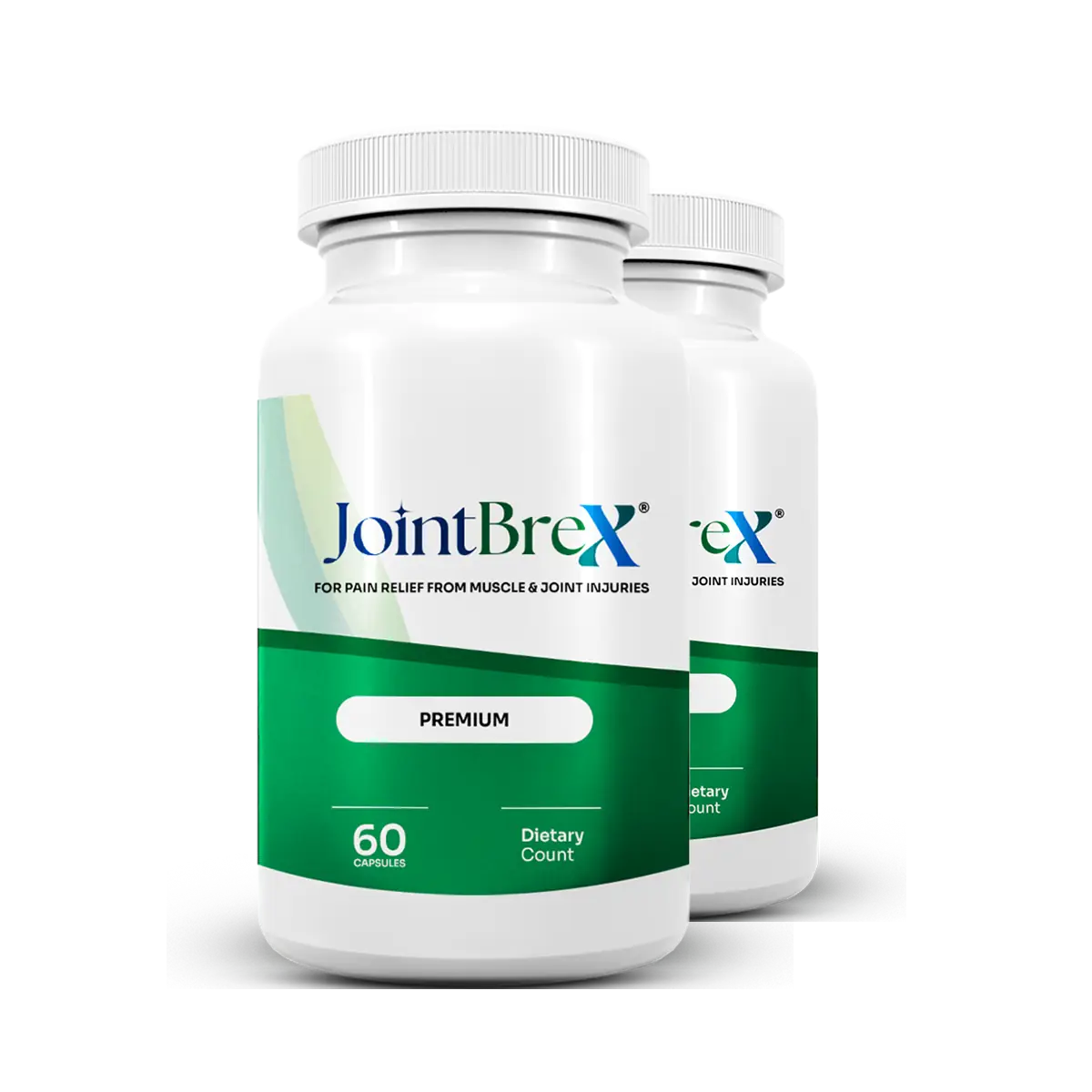
We grade seven criteria and JointBrex passes two of them. If you have read the scorecard and still want to try it, our pricing page carries the current totals, the conflicting figures we found, and the interaction warnings.
Pricing & Warnings →